
What is Answer Engine Optimization (AEO) and why is it important for AI-driven search platforms in modern marketing?
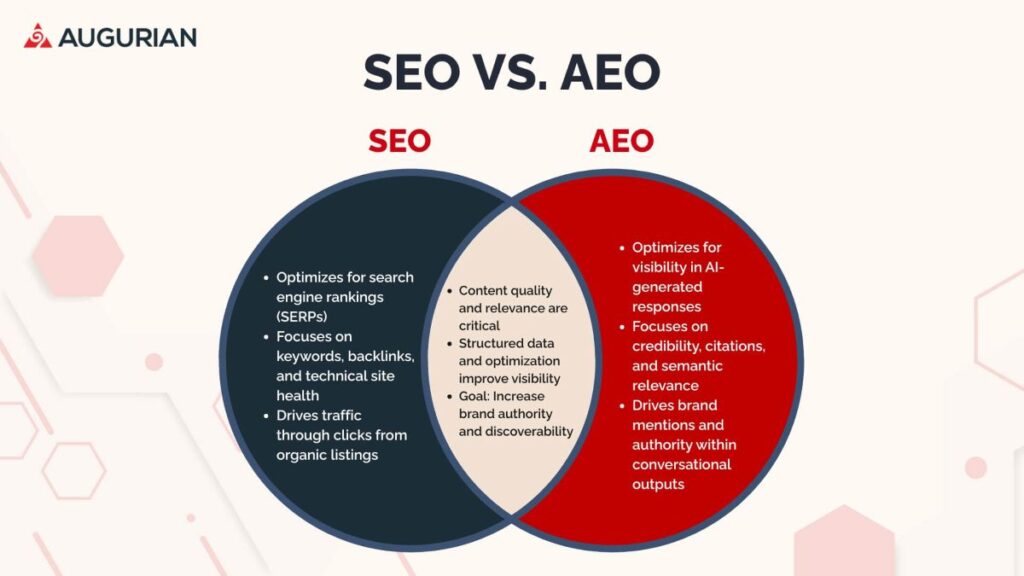
Answer Engine Optimization (AEO) is the practice of structuring and optimizing digital content to appear prominently in AI-generated responses from platforms like ChatGPT, Google AI Overviews, and other large language models. Unlike traditional SEO that focuses on ranking in search result lists, AEO ensures your content becomes the direct answer AI systems provide to user queries.
AI-driven search platforms have fundamentally changed how consumers discover brands and make purchasing decisions. Users increasingly rely on conversational AI tools that deliver instant, synthesized answers rather than scrolling through multiple search results. This shift means brands invisible to these AI systems miss critical touchpoints in the customer journey.
An AEO optimisation agency specializes in making your content AI-readable and trustworthy through technical optimization. These agencies implement schema markup, conversational language patterns, and entity-based content structures that AI systems prioritize when generating responses.
The connection between AEO and maximizing ROI is direct and measurable. When your brand appears in AI-generated answers, you capture high-intent users at the exact moment they seek solutions. This visibility drives qualified traffic to your website, where optimized user pathways convert visitors into customers.
Conversions improve because AEO delivers three key advantages:
- Users arrive with specific intent after receiving relevant preliminary information from AI platforms
- Trust transfers from the AI platform to your brand through authoritative answer placement
- Reduced friction in the decision-making process as users find immediate answers to objections
The impact extends beyond immediate sales. Brands that dominate AI answer spaces build long-term authority, appearing consistently across multiple query variations. This persistent visibility compounds over time, creating sustainable competitive advantages that traditional advertising cannot replicate.
How Do AEO Agencies Operate and What Strategies Do They Use?
AEO agencies function as specialized consultants who bridge the gap between traditional content creation and AI comprehension. Their primary role centers on making brand content discoverable and interpretable by large language models and AI-powered search systems. These agencies employ data scientists, SEO specialists, and content strategists who understand how AI systems parse, evaluate, and present information to users.
The operational framework of an AEO agency begins with comprehensive audits of existing content and technical infrastructure. Teams analyze how current website structures perform in AI-generated responses, identifying gaps where competitors appear but the client doesn’t. This diagnostic phase reveals opportunities for optimization across multiple AI platforms simultaneously.
Technical Infrastructure and Schema Implementation
Schema markup serves as the foundational language that helps AI systems understand content context and relationships. AEO agencies implement structured data vocabularies including:
- Article schema for blog posts and editorial content
- FAQ schema for question-and-answer formats
- How-to schema for instructional content
- Product schema for e-commerce offerings
- Local business schema for location-based services
These structured data implementations transform unstructured content into machine-readable formats. AI systems can quickly extract key information points, understand entity relationships, and determine content relevance for specific queries. Agencies test schema implementations across multiple validation tools to ensure proper recognition by different AI platforms.
Natural Language Query Optimization
AI-driven content optimization requires a fundamental shift from keyword targeting to intent matching. AEO agencies analyze conversational search patterns, identifying how users phrase questions when interacting with AI assistants versus traditional search engines. Content gets restructured to match these natural language queries directly.
Agencies create content that answers questions in the first 40-60 words of a section, mimicking how AI systems prefer to extract concise answers. Sentences become shorter, more direct, and focused on providing immediate value. The writing style adapts to conversational tones that AI models recognize as authoritative yet accessible.
Content Clustering and Topical Authority Building
AEO agencies develop comprehensive content ecosystems rather than isolated articles. They map out topic clusters where pillar pages cover broad subjects while supporting articles dive into specific subtopics. Internal linking structures connect these pieces strategically, signaling
How AEO Affects Website Visibility, User Engagement, and Conversions
AI visibility changes how brands show up on various online platforms. When AI systems like ChatGPT or Google’s AI Overviews provide answers, they rely on sources they consider authoritative and well-organized. AEO-optimized content places brands directly within these AI-generated responses, creating exposure that traditional search results alone cannot achieve.
The Power of Featured Snippets in Search Results
Featured snippets are prime spots in search results. AEO strategies aim for these positions by structuring content to answer specific questions concisely. When a brand’s content appears in position zero or within AI summaries, users see that brand as a trusted authority even before visiting the website.
Boosting Brand Presence with Strategic Content Placement
AI-powered platforms prioritize content that demonstrates clear expertise and directly addresses user intent. AEO agencies organize information using:
- Entity-based content architecture that helps AI systems understand brand relationships and areas of expertise
- Question-answer formatting that mirrors how users phrase natural language queries
- Semantic clustering that connects related topics and reinforces topical authority
This organized approach increases the chances of brand mentions across multiple AI platforms at once. One piece of optimized content can show up in ChatGPT conversations, Google AI Overviews, and voice assistant responses.
Attracting Qualified Traffic with Precise Intent Matching
User engagement pathways start with relevance. Traffic driven by AEO differs from general search traffic because AI systems pre-qualify users by understanding their specific needs. When an AI platform recommends a brand’s content, that recommendation carries implicit endorsement.
Users arriving through AI-generated answers usually display:
- Higher intent signals since AI systems filter and match queries to appropriate solutions
- Lower bounce rates because the content directly addresses their specific question
- Increased time on site as they explore related information after finding initial answers
This qualified traffic converts at higher rates. A user who discovers a SaaS product through an AI-generated comparison answer arrives with context about their problem and potential solutions, significantly shortening the consideration phase.
Speeding Up Decision-Making with Contextual Answers
Conversion optimization improves when users receive relevant information at critical decision points. AEO strategies anticipate questions users ask during different buying
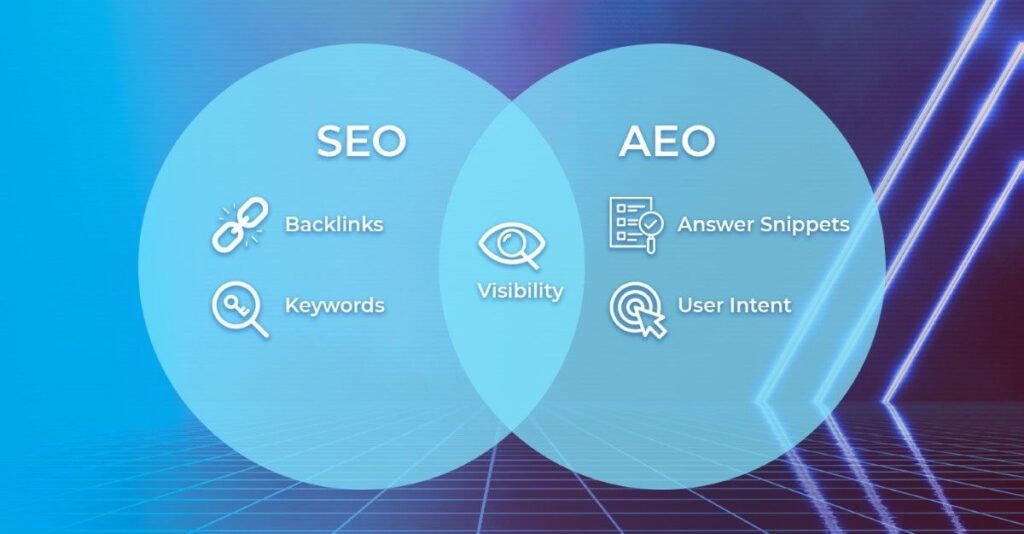
Which Metrics Are Most Relevant For Measuring The Success Of AEO Strategies?
AI-specific metrics provide the foundation for evaluating AEO performance, with the AI answer inclusion rate serving as the primary indicator of success. This metric measures how frequently your brand content appears in responses from ChatGPT, Google AI Overviews, Perplexity, and other LLM platforms when users ask relevant questions. An AEO optimisation agency tracks this rate across dozens or hundreds of query variations to identify patterns and opportunities for improvement.
Conversational SEO performance reveals how well your content ranks for natural language queries that mirror actual user speech patterns. This differs from traditional keyword tracking because it focuses on question-based searches and multi-turn conversations. Agencies measure response relevance scores, citation frequency in AI answers, and the position of your content within generated responses.
Entity strength represents another critical AI-specific metric that quantifies how well search engines and AI systems understand your brand as a distinct entity. Strong entity signals help AI platforms confidently reference your business, products, or expertise when generating answers. Agencies assess entity strength through knowledge graph presence, brand mention frequency, and the accuracy of AI-generated descriptions about your organization.
Voice search optimization metrics capture performance in spoken queries, which typically use longer, more conversational phrasing than typed searches. These measurements include voice query rankings, featured snippet captures for voice results, and the readability scores of content selected for voice responses.
Snippet share calculates the percentage of featured snippets your content owns within your industry or topic area. Since AI platforms frequently pull information from featured snippets when constructing answers, dominating this space directly impacts AI visibility. An AEO optimisation agency monitors snippet acquisition rates, retention periods, and competitive displacement metrics.
Conversion tracking bridges the gap between AI visibility and business outcomes by connecting AI-driven traffic to revenue-generating actions. Agencies implement specialized tracking parameters to identify users who arrived through AI-generated answers or voice search results. This granular attribution reveals which AI platforms deliver the highest-quality leads and which types of AI-optimized content drive conversions most effectively.
Traditional SEO metrics remain essential for comprehensive AEO measurement, creating a complete picture when combined with AI-specific data:
- Organic rankings for both traditional and conversational keywords
- Click-through rates (CTR) on organic listings across different devices
- Bounce rates and average time on page metrics for visitors coming from AI sources
- Conversion rates associated with organic traffic segments
By analyzing these metrics together—AI-specific indicators alongside traditional SEO measures—you can gain deeper insights into the effectiveness of your AEO strategies and their impact on overall website performance.
How Can AEO Efforts Be Aligned With Broader Digital Marketing Goals For Maximum Impact?
AEO delivers maximum impact when integrated as a core component of your digital marketing ecosystem rather than operating as an isolated tactic. The most successful implementations treat AEO as a layer that enhances existing SEO foundations while feeding data into broader analytics frameworks.
Coordinating AEO with SEO Strategy and Analytics
Digital marketing integration begins with mapping AEO initiatives directly to your existing SEO roadmap. AEO agencies analyze your current keyword strategy and identify opportunities where AI-driven platforms are answering queries related to your target terms. This creates a unified approach where traditional search optimization and AI answer optimization reinforce each other. You may like to visit https://business.gov.au/marketing-and-advertising/marketing to get more about marketting.
The coordination extends to technical infrastructure. Schema markup implemented for AEO purposes simultaneously improves traditional search engine understanding. Content clusters built for topical authority serve both conventional crawlers and LLM-based systems. Internal linking structures designed to demonstrate expertise to AI platforms also distribute page authority for traditional rankings.
Website analytics integration allows teams to track the full user journey from AI-generated answer to conversion. By implementing UTM parameters specific to AI traffic sources and setting up custom segments in analytics platforms, agencies can isolate the behavior patterns of users arriving through AI-powered search results. This data reveals:
- Which AI platforms drive the highest-quality traffic
- How AI-sourced visitors interact differently with site content
- Where friction points exist in the conversion funnel for AI-referred users
- Which content formats perform best for audiences coming from answer engines
Leveraging A/B Testing for Conversion Optimization
SEO synergy reaches its peak when AEO-optimized landing pages undergo systematic testing. A/B testing frameworks specifically designed for AI-referred traffic help identify which page elements convert visitors who arrive with specific intent signals from answer platforms.
Testing variables include:
- Headline formulations that match the conversational queries AI platforms answer
- Content depth to determine whether AI-referred visitors prefer comprehensive answers or quick action paths
- Trust signals such as credentials, certifications, or social proof that resonate with users seeking authoritative information
- Call-to-action placement optimized for users who have already received partial answers from AI systems
What Role Does Technology Play In Helping Agencies Continuously Improve ROI Through AEO Strategies?
Technology is essential for measuring and improving AEO performance. It allows agencies to track how AI systems use and display brand content.
How Technology Helps Agencies Improve AEO Performance
Here are some ways technology helps agencies improve AEO performance:
- Data Collection: Proprietary platforms and specialized monitoring tools gather data from various large language models (LLMs). This data shows which content appears in AI-generated responses and how often brands are visible in answer engines.
- Metrics Tracking: These platforms track important metrics that traditional analytics tools may overlook. They monitor AI answer inclusion rates across different platforms like ChatGPT, Google AI Overviews, Perplexity, and other emerging answer engines.
- Pattern Identification: The technology identifies patterns in how different LLMs understand and present information. This insight allows agencies to adjust their content structure and semantic signals accordingly.
- Real-Time Feedback: With real-time data monitoring, agencies can quickly respond to changes in AI visibility caused by algorithm updates or competitor content outranking client brands in answer results.
- Continuous Improvement: The refinement process relies on ongoing data analysis, including entity recognition tracking, query pattern analysis, snippet performance metrics, and conversion path mapping.
- Competitive Intelligence: Advanced tools provide insights into how rival brands appear in AI-generated answers. This information helps agencies identify content gaps and opportunities for clients to strengthen their presence in answer engines.
The Benefits of Using Technology for AEO Strategies
By leveraging technology in their AEO strategies, agencies can achieve several benefits:
- Precision Marketing: Instead of relying on guesswork, agencies can now implement precise marketing strategies based on real-time data insights.
- Rapid Response: The speed at which feedback is received enables agencies to quickly adapt to market changes before significant traffic or conversion losses occur.
- Improved ROI: Machine learning algorithms within these platforms predict which content optimizations will yield the highest return on investment (ROI) based on historical performance data.
- Unified View of Customer Journey: Integration capabilities connect AEO monitoring tools with existing marketing technology stacks, creating a comprehensive understanding of how AI visibility impacts the entire customer journey from discovery to conversion.
With the help of technology, agencies can continuously improve their AEO strategies and drive better results for their clients. Click here to get why your next website needs expert Umbraco development.
What Is The Future Of AEO Optimization In Driving Long-Term ROI Benefits For Businesses?
The future of AEO optimization centers on AI’s expanding role as the primary information gateway for consumers. Businesses investing in AEO strategies now position themselves to capture market share as traditional search gives way to conversational AI interfaces.
Will AI-Driven Search Replace Traditional Search Engines?
AI-powered answer platforms are rapidly becoming the default method users employ to find information. ChatGPT, Google AI Overviews, and similar technologies now handle billions of queries monthly, fundamentally changing how consumers discover brands. Companies that optimize for these platforms gain first-mover advantages in visibility and trust-building.
The shift creates new competitive dynamics. Brands appearing consistently in AI-generated responses establish authority that compounds over time. Early adopters of AEO strategies build entity recognition within AI systems, making future visibility easier to maintain and expand.
How Will AEO Strategies Evolve With AI Technology?
Maximizing ROI: The Impact of an aeo optimisation agency on Conversions depends on adapting to AI’s continuous evolution. Language models become more sophisticated in understanding context, user intent, and brand differentiation. AEO agencies must refine their approaches to match these advancements.
Key evolutionary trends include:
- Multimodal optimization – AI systems increasingly process images, video, and audio alongside text
- Personalized answer generation – AI tailors responses based on user history and preferences
- Real-time information integration – Answer engines pull from live data sources for current information
- Deeper semantic understanding – AI grasps nuanced brand positioning and product differentiation
Agencies that stay ahead of these trends deliver sustained ROI improvements. They test emerging platforms, experiment with new content formats, and adjust strategies as AI capabilities expand.
What Long-Term ROI Advantages Does AEO Provide?
AEO investments compound over time, unlike many marketing tactics that require constant spending. Once a brand establishes strong entity recognition and topical authority within AI systems, maintaining that position requires less effort than achieving it initially.
The long-term benefits include:
- Reduced customer acquisition costs – AI-driven visibility generates organic traffic without ongoing ad spend.
- Enhanced discoverability – As AEO strategies evolve with AI technology, businesses will experience improved visibility across various platforms, leading to increased brand awareness and customer engagement.